


Understanding the Unique Design of Raptors' Beaks
Updated: Dec 3, 2025
Raptors possess unique, hooked beaks that are specially designed for tearing apart the flesh of their prey. There are however subtle differences in the shape that reflects the specific natural history and feeding strategies of the main diurnal raptors.
Accipiters: Hawks and Eagles
Accipiters' beaks tend to be long, very sharp, and on each side of the upper mandible present a curve known as "festoon." This curve resembles kitchen shears or a garland shape. It prevents the meat from sliding away from the sharp, cutting edges made of keratin. Interestingly, the back corner of the mouth is fleshy and lacks cutting edges. This type of beak can efficiently tear to very hard skin, like a squirrel's hide, and disjoint the main parts of the prey.

Falcon's Tomial Tooth: Key Feature for Prey Dispatching
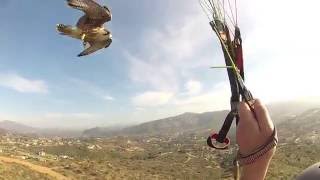
Falcons exhibit a unique feature known as the tomial tooth. This can opener-shaped notch on the upper mandible allows them to efficiently dispatch their prey. The tomial tooth fits perfectly into the cervical vertebrae of a bird's neck, and provides leverage to break long bones into smaller pieces.
Other birds also possess a tomial tooth. Parrots, evolutionary close to falcons, are well-known examples, but shrikes and kites have them as well.

Experience Raptors Up Close
Come see these amazing beaks at work in person during our falconry experiences! Witness the incredible skills of these birds as they demonstrate their hunting prowess. You'll gain a deeper appreciation for their unique adaptations and the role they play in the ecosystem.
All photos were taken by George Adkins during our Falconry Experiences in La Jolla. Thank you, George!




This post about the farmers market is really lovely. It is great to see communities supporting local produce and small vendors. I looked for cheap renters insurance Texas when I wanted affordable coverage. Good community markets and good insurance both help you feel connected.
Mình có lần lướt đọc mấy trao đổi trên mạng شيخ روحاني thì thấy nhắc nên cũng tò mò mở ra xem thử cho biết. Mình không tìm hiểu sâu جلب الحبيب chỉ xem qua trong thời gian ngắn để quan sát bố cục جلب الحبيب cách sắp xếp شيخ روحاني các mục và trình bày nội شيخ روحاني dung tổng thể. Cảm giác là các phần được trình bày khá gọn, các Berlinintim mục rõ ràng nên đọc lướt cũng không bị rối Berlinintim với mình như شيخ روحاني vậy là đủ để nắm tin cơ bản rồi. جلب الحبيب
😍
The gaming experience feels very user friendly because the application avoids unnecessary complexity and keeps everything easy to understand. Navigation flows naturally, allowing users to access features quickly. I also liked how responsive the platform feels on mobile devices. The clean structure improves readability and helps maintain a comfortable experience. Overall, the platform delivers an enjoyable and accessible environment for gaming users.
Raja Game App
En comparant récemment plusieurs sites de PME françaises dans différents secteurs, j’ai remarqué que beaucoup d’entreprises sous-estiment encore l’impact d’une communication bien structurée sur la perception globale de leur activité. Certaines plateformes donnent une impression confuse malgré un bon produit ou un bon service derrière. Pendant mes recherches autour d’une agence de communication pour PME francaises, j’ai surtout trouvé pertinentes les analyses qui parlent de clarté, de régularité et d’adaptation au public cible plutôt que de techniques artificielles. Les visiteurs perçoivent rapidement lorsqu’un projet est pensé de manière cohérente, aussi bien dans les textes que dans la manière de présenter l’entreprise. J’ai aussi observé que les PME qui prennent le temps de travailler leur image sur le long terme semblent…
The post about specialized raptor beaks was really fascinating, especially how their shape helps them tear flesh efficiently in the wild. It reminded me of a biology class where we studied how animal features evolve based on survival needs. During that same semester I was juggling several technical assignments and even searched top python assignment writing service while finishing a coding task. Learning about adaptations like this really shows how function and design work together in nature.